
I woke up today to heavy rain 😦 Fine usually, just find something to do inside, but the reason I came to South Wales is because it’s by the sea and I assumed would have some spectacular scenery.
I had a nice breakfast and got ready for the day (including a lovely hot shower in my caravan again – thank goodness) and set off just as the clouds looked like they were going to break.
I decided not to plan for today, but to just drive towards the coast and see where it led me. So I headed out West of Tenby as it looked like there wasn’t much there on the map, so I figured it would be full of viewpoints and cliff edges, possibly beaches.
The first place I drove through was called Penelly and as I made my way through the small village I noticed a brown tourist sign that said ‘Castle’. So, I followed it…
Suddenly, ahead of me was Manorbier Castle.
The castle was originally built on land granted to Odo de Barri, a Norman knight, at the end of the 11th century. Initially he constructed a Motte-and-bailey on the site which had a wooden keep defended by a palisade and earthworks embankments. In the early part of the 12th century, William de Barri, Odo’s son, used locally-quarried Limestone to strengthen the fortification.
In 1146 Gerald of Wales, the great 12th century scholar known as Geraldus Cambrensis was born at the castle. He was the fourth and youngest son of William de Barri, who was related on his mothers’s side, to the legendary Welsh princess Nest ferch Rhys. Gerald wrote of his birthplace:
‘In all the broad lands of Wales, Manorbier is the most pleasant place by far’.
In the castle’s history, it was only attacked twice; both were minor skirmishes. In 1327, Richard de Barri assaulted Manorbier in a dispute over family succession. Then 300 years later during the English Civil War, the castle was seized in 1645 by Parliamentarian forces. It was then slighted to prevent further military use by the Royalists.
Through the 17th and 18th centuries Manorbier fell into decay. However, in 1880 the castle was partially restored by J.R.Cobb, a tenant who carried out repairs to the buildings and walls.
The castle is open to the public for a small fee (I paid £5.25) and also holds weddings. It’s effectively a ruin, but it’s great to be able to walk up and down the original stairs, along the uneven floors, all at your own leisure. It was actually very pretty and had a lovely feel to it. There was also a tea room and outside seating to rest your legs and nerves after climbing some of the stairs – they were pretty steep in places!


Where did that saying come from? – ‘On the Dole’
In the 12th century a large lunch was served in big houses and castles mid-morning. The food was eaten off of pewter pottery and silver platters. For the lesser folks, food was served on a hunk of bread, to act as a plate, known as trenchers. Once the trencher had soaked up the juices and fat from the meal, they were distributed to the poor or put in Doley boxes next to the churches for travellers. This is where the saying came from!


Did you know – Latrines
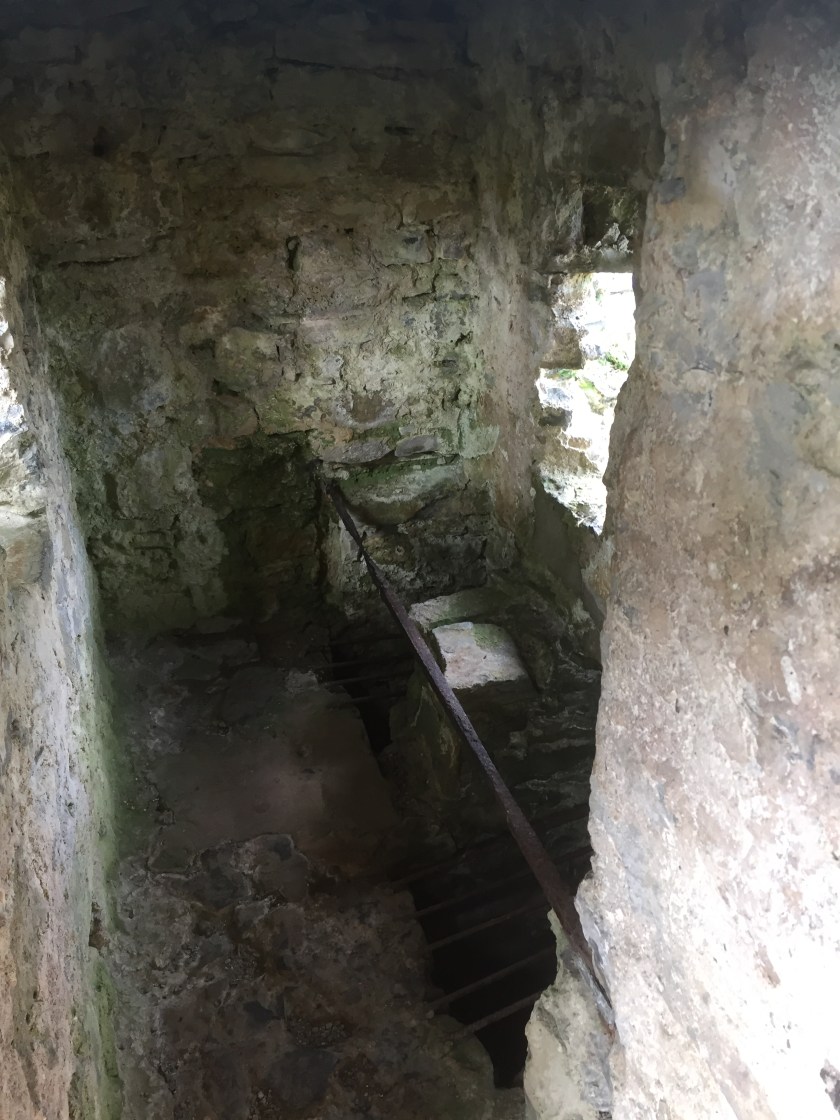
You probably know that latrines were toilets. This is a double latrine from the castle. Latrines had a dual purpose because the guardarobe meaning in Latin ‘Guarding The Robes’, were used for hanging furs and ermine trimmed cloaks above the latrines, as the methane and ammonia kept the moths and fleas away.


Next I went up to the Norman church just beside the castle.


I didn’t send too much time here as there wasn’t much to see and I could see blue sky coming over so wanted to be outside! Left the church and followed a public pathway towards what I hoped would be the beach.


Found the beach and you can see the blue sky gradually come over while I was there. Beautiful beach and very calm water – some people wake boarding and pretty much deserted.
Spent some time sitting on the beach, admiring the view and then got back in the car and started to drive again.
Only drove for around 10 mins when I saw a National Trust logo and thinking it might be a nice coastal path, I turned into the car park.
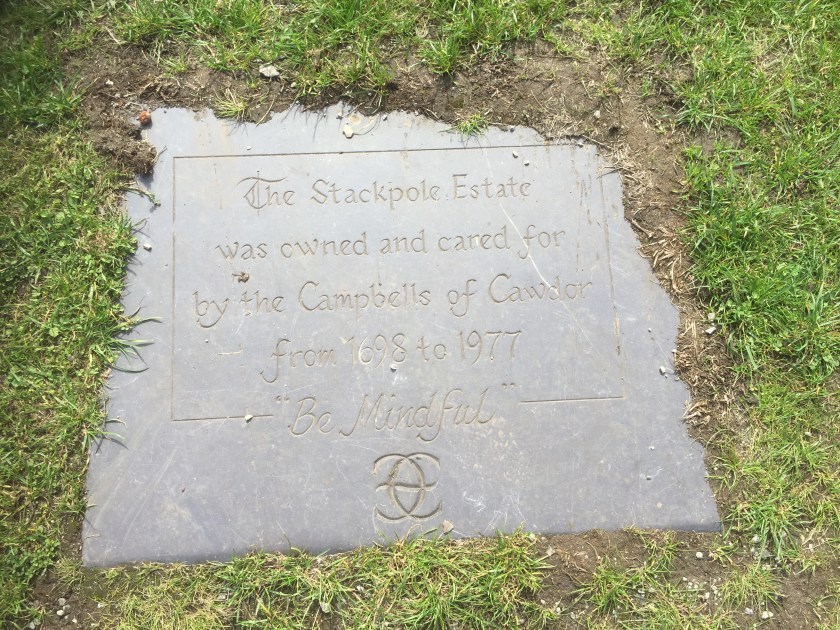
I had discovered ‘Stackpole Court’, originally a medieval stronghold, then a fashionable Georgian house and finally a sprawling Victorian mansion. Until now…..now it was where a Victorian mansion once stood, before it was demolished by the son of the owner after their death as he couldn’t afford to keep it.
I first followed a sign post to the ice house and discovered a rather ornate building in the woodlands that looked nothing like an ice house and more like a summer house!


I followed the path around until I got to what I believe were the old walled gardens (you can see the gate posts in the photos) and walked through this area towards the site of the house.


This is now a lovely green space with only the service buildings left of what used to be a bustling estate. Still standing are the Game Larder, Brew House and the old dairy which now holds a small exhibition of the estate. You could see the few remaining photos of the house and its interiors in there and more information on the surrounding land.


The Brew House was still there with a few of its original equipment and some rooms for visitors to use to eat their picnics come rain or shine.
I next walked to what would have been the back garden. What a stunning view! As you can see from these photos, it looked like a painting rather than a view! You would be forgiven for thinking I had gone into an art exhibition and taken a photo of one of the paintings.
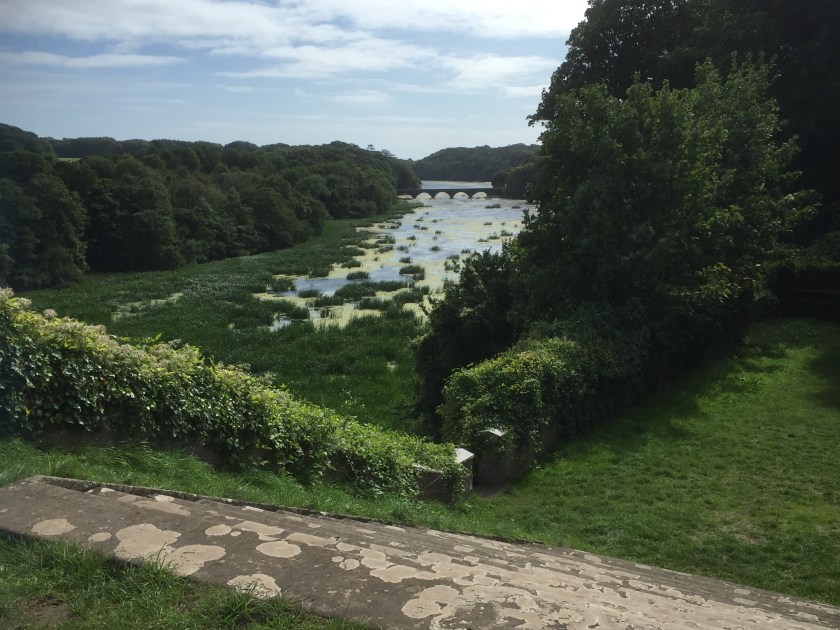
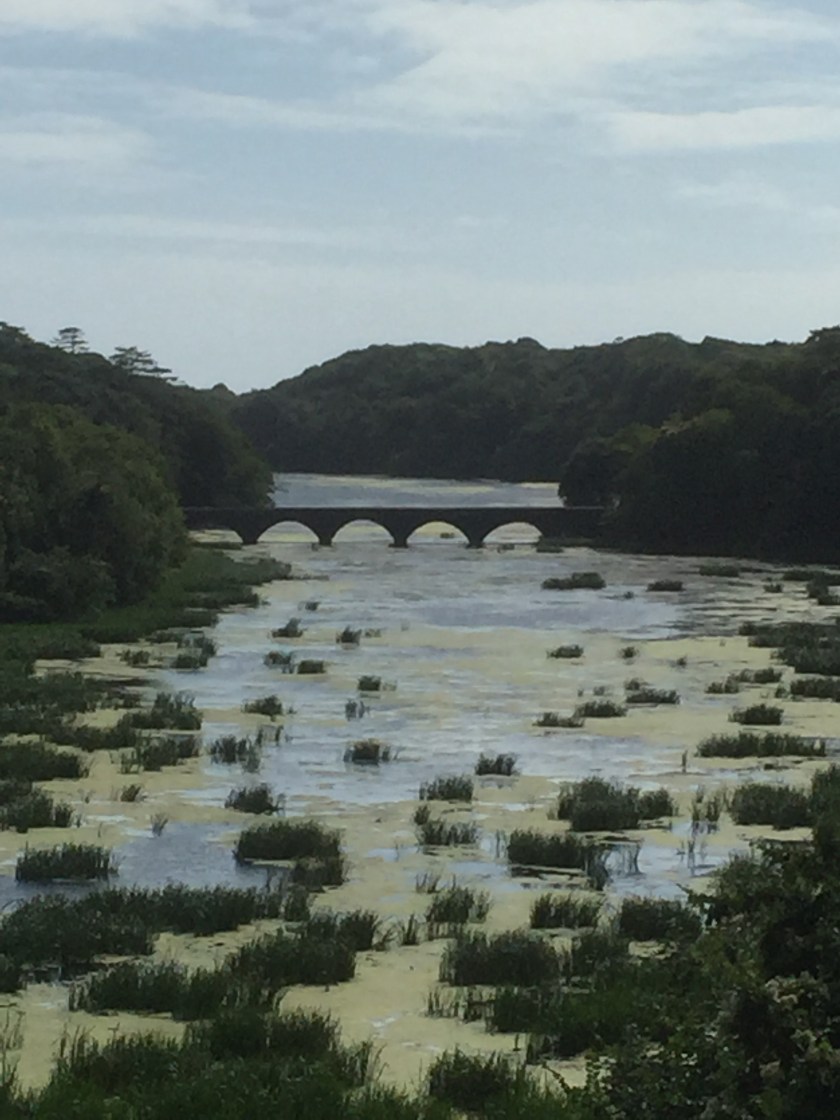

Luckily the National Trust has thought to put photos of how the house would have looked up, near the space it would have stood in. You can see this in these photos.


It was actually quite sad to think that this house, that was full of life, servants and history, was demolished and now all that’s left is a green space and its outbuildings. I wonder what the family that lived in it so long ago would have thought of that?
Onwards following the coastal road and I eventually came to some more incredible views, just as I had hoped!


Freshwater West was a HUGE beach and quite stunning. Again, the beach was pretty much deserted so I spent some time sitting and enjoying the sunshine. It was right next to a military shooting range, but I didn’t see or hear anything out of the ordinary!
I carried on between the sand dunes to yet another gorgeous beach, this time in ‘Angle’. This is the furthest point of the area I was visiting, so there was nowhere to go from here!
I was very happy to see a building that looked like a tea room and was actually a hidden gem of a restaurant. The ‘Wavecrest’ serves full lunches, as well as snacks alongside alcoholic drinks if you so desire. I wish I had found it earlier, but it was 3.45pm by the time I got there, so I had tea and a fridge cake whilst enjoying the fabulous view from their inside area and reading my book . You could also get a takeaway or sit outside, but it was a bit windy for me.


There was also an old fort that you can see in the photos, that I couldn’t get to, but found out it was one of two that protected the estuary from attack and dates from the 1500s.


Took a walk along the beach and then headed back to my car to make my way back to Tenby. I stopped on the way to take some land shots whilst the sun was out – here they are….


Back at the campsite and I sat outside my caravan to relax with a glass of wine and enjoy the view.
This is the photo I took outside my caravan in the morning….. and the same view later this afternoon, once the sun had come out.


Lovely, sunny day in South Wales 🙂
 One (wo)man and her (cara)van
Oh wow! Those beaches look beautiful. No plan days seem to turn out very well .
LikeLike