Monday 27th August – Bank Holiday Monday fun

First job of the day was some laundry – wild! After hanging this up on my parents camping rotary line to dry, about 5 minutes later I had to lug the whole thing inside their awning as it began to rain! Good job they have a big awning. Amused ourselves for an hour or so by walking around the campsite with my parents and Nephew playing ‘Run, run, run….jump’ – lots of fun.

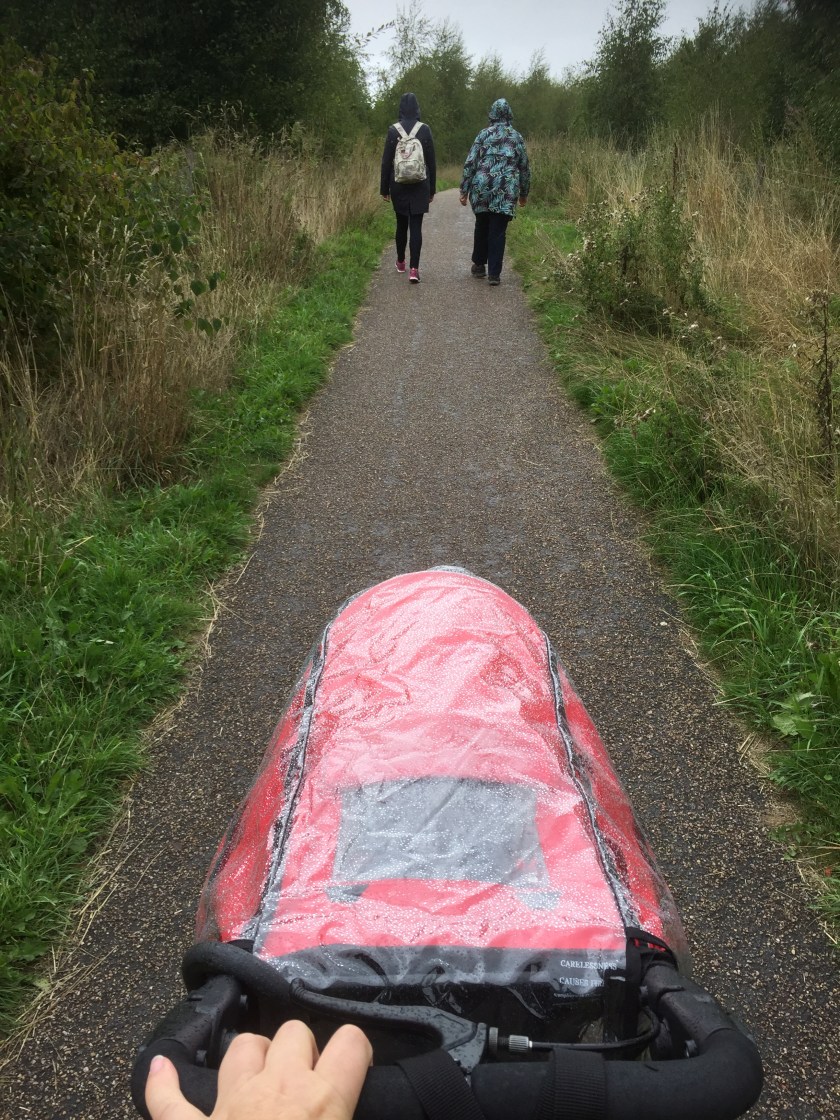
The Ladies of the group (Me, Mum and little sister) decided to walk to our destination of choice today, with my Nephew in his buggy/walking with us. We were heading for Moira Furnace, which directions told us was only a few minutes’ walk away. We clearly took a wrong turn somewhere as it took us about 40 mins, but it was a lovely walk anyway!
IMG_7830.JPG

The walk was along an old railway line of the Ashby and Nuneaton joint railway which carried Leicestershire coal for 90 years. The photo that shows where two pathways connect used to be where, for nearly 100 years, a railway junction stood.  It was opened in 1873 and closed in 1969, and its tracks were lifted and removed in 1972.

You could still see some of the old side building along the way and it was a lovely flat walk, clearly popular with locals and people on holiday in the area.

After asking a horse rider the way – we eventually arrived where we were meant to be about half an hour before!

My Dad and BIL came along a bit later in the car in case of very bad weather of if we needed a car – we did as Mum and sister went off to buy some dinner a little later. The parking was free!

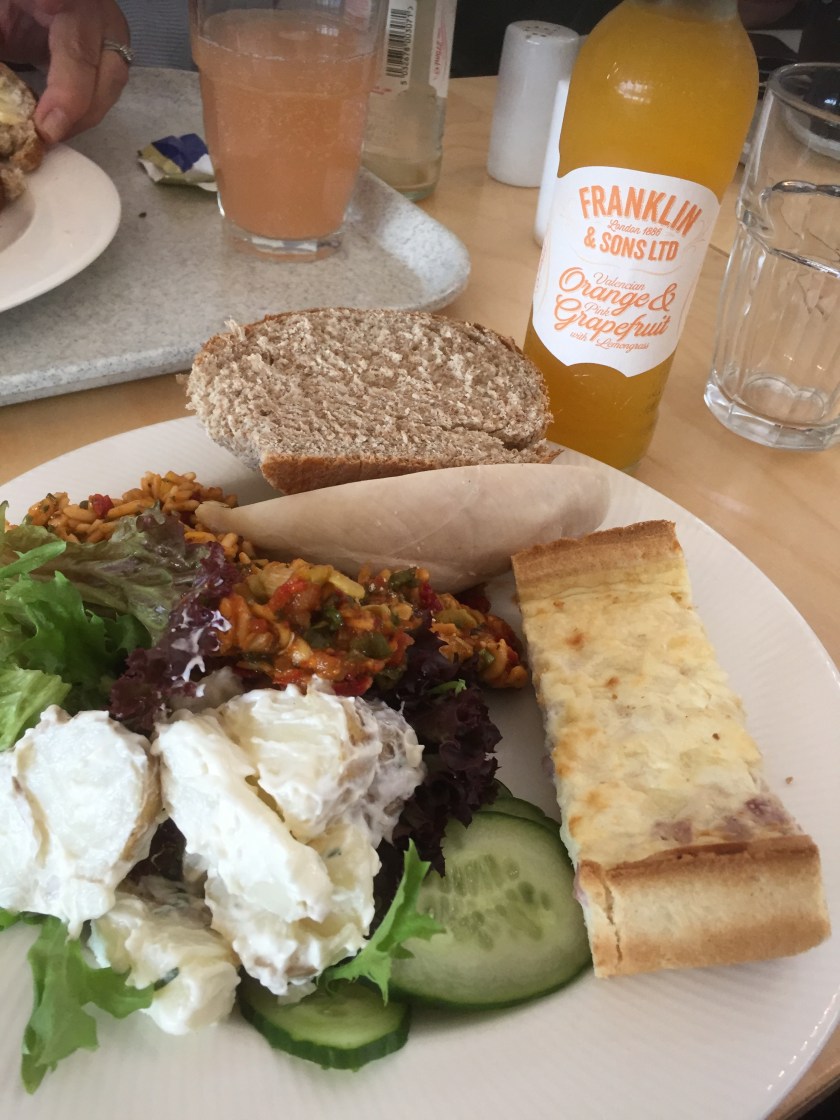
First things first – lunch. There was a lovely café onsite called ‘The Hub’ that served dishes from a bacon butty, to a jacket potato and toasties with chips. They also had a range of hot and cold drinks and were all really friendly and helpful, plus you could choose to sit inside or out. When the food arrived, it was delicious. Here is the obligatory photo!

IMG_7844.JPG

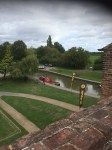
After filling up we headed towards the canal that ran alongside the old furnace building to take a short 20 minute canal boat ride.

It was only £2.50 for adults £1.50 for child and was driven and maintained by the volunteers there who were really happy to chat to everyone and explain the history of the place. Incredibly welcoming and full of interesting information.

We also got a quick tour of the inside of the boat that has been restored to how it could have looked during the times that coal was taken along the canal, rather than by train.

It was very small and compact and reminded us a little of our caravans! There were rules that the boat families had to adhere too, one being they were only allowed to have two children – you could see why with the lack of space they had – and they were visited by inspectors to ensure that this was the case. In the museum there were stories of how the kids used to hide in other boats or in drawers! It would have been a tough life as they never stopped – if they did they got charged mooring fees, so the family and horses would be constantly moving along the canal to get their cargo to the right place.

Now for some history!

Moira Furnace is a nineteenth-century iron-making blast furnace located in Moira, Leicestershire, on the banks of the Ashby-de-la-Zouch Canal. Built by the Earl of Moira in 1804, the building has been preserved by North West Leicestershire District Council as a museum featuring lime kilns and craft workshops.

In 1804, the Earl of Moira had the furnace constructed to take advantage of the iron ore and abundant coal which were present underground in the surrounding Ashby Woulds area owned by him. The location was chosen for its proximity to the Ashby Canal for transport, and the lie of the land which allowed the furnace to be built low down so the raw materials did not need raising very high.

However, this was a period of development in blast furnace design and some of the features of Moira Furnace do not appear to have been successful. It was brought into blast in 1806, and used intermittently until 1811, though the foundry remained in use until after 1844 by utilising iron brought in from elsewhere.

The historical evidence shows that, although saleable iron was at times produced, over the period that the furnace operated it experienced continual problems. The furnace was abandoned with its final charge still inside, partially smelted.

The attached foundry continued to be used for some years, using brought-in pig iron, though it was demolished later in the 19th century. Meanwhile the bridgehouse and the engine house, which was a separate building to the side of the furnace, were converted to dwellings and survived. However, by the 1970s they had become derelict and affected by mining subsidence and the engine house was demolished.

After pressure by Philip Riden and from Leicestershire Industrial History Society, the furnace and bridgehouse were scheduled as an ancient monument. The site was acquired by North West Leicestershire District Council in 1981, who sponsored a Community Programme to restore the site and develop it as a museum and country park.Inside the bridgehouse there is now a museum, operated by the Moira Furnace Museum Trust, which is open regularly.

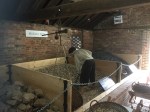
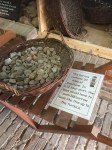
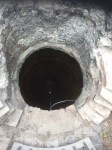
The small museum was great, giving stories from relatives of the people who had lived there once it was converted to homes. These homes only had two rooms and there was a mark on the ceiling that showed where the dividing wall between the four houses (within one building) used to be. They even built a house in one of the canal bride arches when the canal was no longer in use – you can see these in the photos below.

After we’d taken a look around, we played pooh sticks with my Nephew on the bridge and then myself, Dad, BIL and Nephew walked back to the campsite – we went the right way this time!

Late afternoon was spent on the campsite again – playing with Tom and chatting with everyone. It’s been nice to slow down for a few days, as I was visiting at least two places each day when I was travelling alone. Now I’m looking forward to exploring Shropshire from tomorrow for a few days.

Dinner tonight is one of my favourites – what we call ‘picky bits’ which is salad, bread, warm sausages, cheese and crackers, meats etc, followed by more homemade cake and some ice cream.

We are all leaving tomorrow morning, so this evening we all started our break down process, but I will do most of mine tomorrow as I need to plan my next journey…wonder if I will be able to stick to it this time?
Sunday 25th August – More rain, so more National Trust

I think I have single-handedly finished the summer for everyone, so sorry about that. Ever since I left for this trip, I’ve had rain everyday apart from yesterday. It’s beginning to get a little annoying to be honest, but at least I have a water tight caravan to go back to at the end of the day. It just means that there isn’t much walking around the countryside and in gardens at the moment, which it what I was hoping for a bit more of.

Anyway – still enjoying my travels and finding plenty to keep me/us occupied despite the weather.

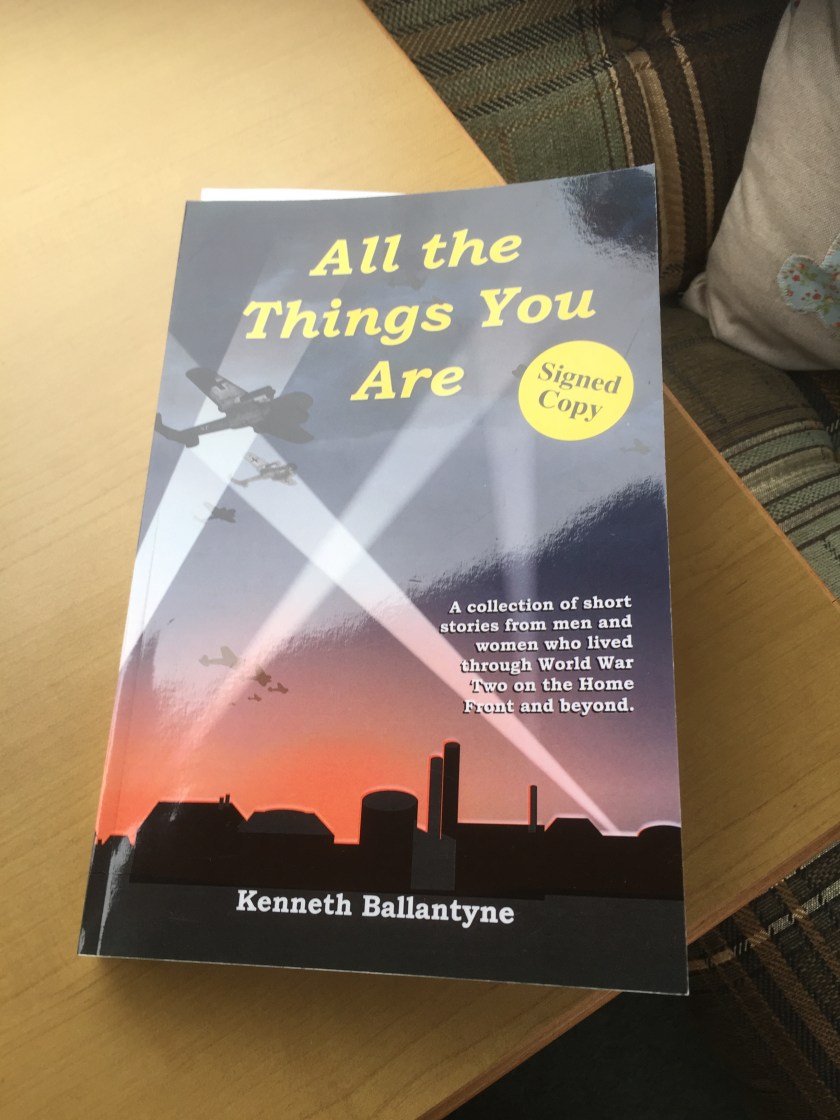
I forgot to mention yesterday that I bought a book from the National Memorial shop, called ‘All The Things You Are’ by Kenneth Ballantyne. This book tells the true stories of men and women who lived through the Second World War, in their own words. I started reading it yesterday and over breakfast this morning and it’s brilliant. Well worth a read – happy to lend or go buy it if you can.

IMG_7762.JPG

Also forgot to tell you all about the second gift from our friend Mavis that my Mum bought along – this time with Puffins on. It’s like Mavis predicted my trip to Puffin Island the other day! Thank you once again Mavis.

IMG_7763.JPG

Today we are heading to Calke Abbey, another National Trust property, but this is one with a difference.

Some of us were more excited at the prospect than others…. And we are all waterproofed up for the day ahead!

As we showed our membership cards at the gatehouse, they handed us a CD to listen to as we approached the house, that told us a little about the history of the building. My sister suddenly announced ‘Oh, it’s a bit like Jurassic Park’. If anyone remembers the start of the first film, they begin their tour of the park inside a monorail car with commentary – luckily we didn’t see any man-eating dinosaurs!

How was this property different to other NT places? Well, it’s described as the ‘Un-stately home and Country Estate’ as the Harpur Crewe family, reclusive and private, kept Calke Abbey and its park hidden away until the house, its collection and the estate were handed to the NT in 1985. As the gates were unlocked, and the shutters opened, life in this declining country house was revealed.

Time had stood still – rooms full of treasures collected by the family who never threw anything away, and an estate that had become a haven for wildlife.

With peeling paintwork and overgrown courtyards, Calke Abbey tells the story of the dramatic decline of a country house estate. The house ad stables are little restored, abandoned areas vividly portraying a period in the twentieth century when many country houses did not survive to tell their story.

You were encouraged to experience a day in the life of Hilda Moseley, the Lady of the Estate or Ruth Musson, who was an Under Parlour Maid there in the 1940s, by following cut-outs around the house that told little stories of their lives. Hilda seemed well liked by the tenants of the estate, who remembered her delivering vegetables to anyone who was ill, and we also heard from Ruth, who didn’t seem very happy there, but she did have a very hard job.

Ruth was quoted as saying “I was only at Calke Abbey about a year. I didn’t like it because I was lonely and I had a long way to go, there wasn’t much time off, so I left after about a year. I joined the Land Army when I was 17.”

I’m not sure how I felt about the house – on the one hand it was quite magical to walk through an undisturbed house, shown as it was left by its owners as they moved from one part of the house to the next, locking doors to the rooms full of their ‘stuff, before occupying another, but on the other hand, it’s a shame that such a huge, grand house isn’t shown at its best, when the family lived and entertained there. You can see plenty of derelict houses across the world, but there still aren’t that many grand houses to look around and remember how certain people used to live.

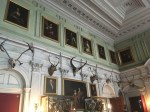
It was a fascinating insight into the last family who lived there though – their eccentricities and hobbies. We weren’t too comfortable with all the taxidermy around the house, but if that’s what the owners liked, then fair enough it was there!

We enjoyed lunch in their tea rooms – I had a rarebit on a cheese scone, which was very nice, and there was also a huge barn with activities for kids in that my Nephew enjoyed. In these photos you can see him drawing a picture and pretending to be a robot – very cute.

We did find a census report from 1901 that showed the people who worked in the house at that time. The Coachman, George Coleman, listed was from Sherington, Bucks. This is just a few miles from my home town of Olney! He worked there for over 50 years!

We headed back to the caravan next, for tea and cake and managed to take a couple of little team photo (Me, my Nephew and sister) on the way back! I haven’t cropped my BIL (who was driving) out of the photo – he didn’t want to be in it!

Spent the rest of the afternoon (not much left of it by the time we got back) relaxing, reading, chatting – with the heater on in my parents awning – Gotta love British summer time!

Dinner tonight was Mum’s homemade chilli and rice, with garlic bread. We are so lucky to have a mum so skilled at cooking and baking – we get very well looked after when we camp together.

Stopped raining around 6pm, and it was a nice, warm evening – typical!


Saturday 25th August – We shall remember them

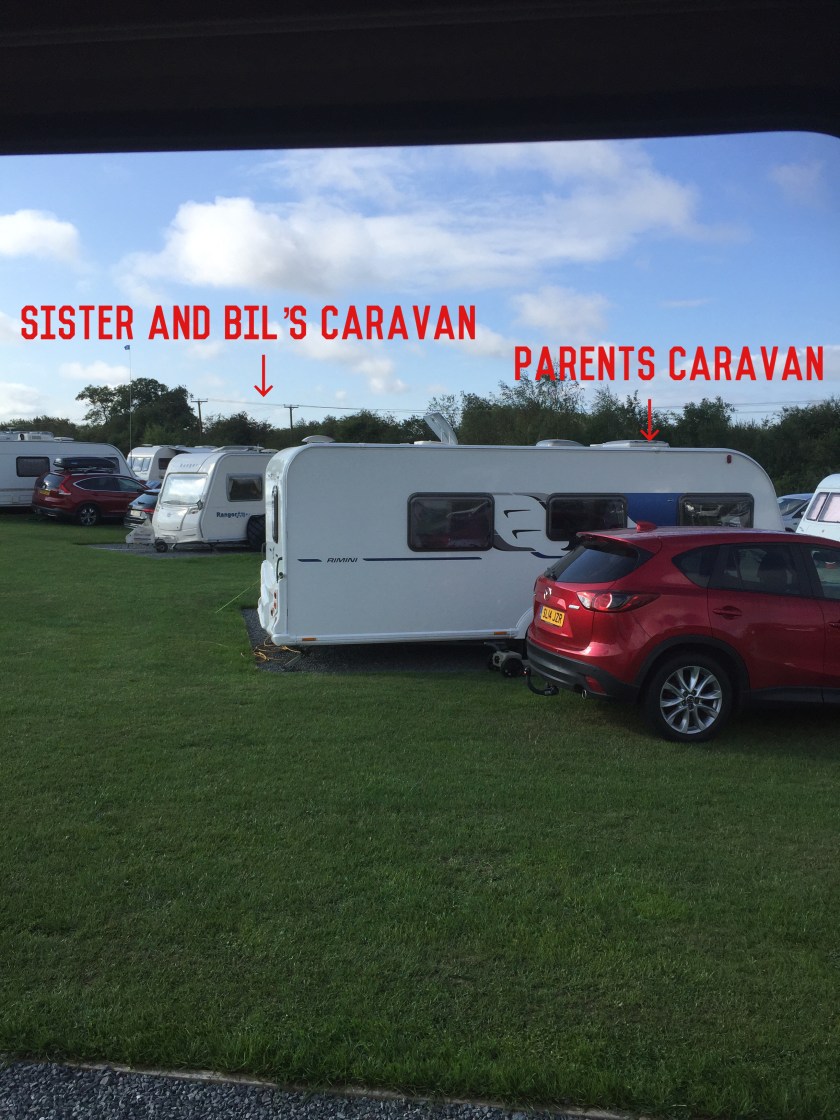
Woke up to sunshine today and someone to have breakfast with! Shared some cereal with my parents in their awning this morning and a lovely cup of tea. Here is a dry weather version of the photo I put on Instagram yesterday, marked up with where my families vans are in comparison to where mine is.

IMG_7758.JPG

After a quick family discussion we decided that today we would visit the National Memorial Arboretum. This is the year-round centre of Remembrance and home to the iconic Armed Forces Memorial, opened by the Queen.

On around 150 acres of land there are over 350 thought-provoking memorials, nestled amongst woodland and gardens. These cover military and civilian tributes – for teams, organisations or individuals.

It’s free to get in (£3 parking) and you can then buy extra’s such as a train trip around to get your bearings, guided tours etc. It’s primarily run by very enthusiastic volunteers and relies on donations to keep going and growing.

img_7682.jpg

The idea all started when David Charles visited America and saw how they remembered and respected people who had served their country. David thought that enough wasn’t being done in the UK to do the same and that people were beginning to forget, rather than remember the sacrifices made in the past for us.

After returning from his trip, he approached John Major, who was Prime Minister at the time, who gave full backing (but no budget!) to his idea and put him in touch with the right people to everything off the ground. The owners of the land they found agreed to a 999 year lease at £1 a year and to date, they and the subsequent owners, have never asked for the money. The volunteers do walk around with a pound in their pocket every day, just in case though!

By 2000, enough money had been raised to build a simple visitor centre and chapel, and it has grown since then. Now there are over 30,000 trees and many different memorials to look around, all dedicated to different people, groups, organisations etc.

One example is the area dedicated to Anne Frank, and civilians affected by war. Anne was the Jewish child ( and eventual author of her published personal diaries) and victim of the atrocities during the Nazi reign, and the death camps across Europe. This memorial is kept cut-back so that the flowers and seeds aren’t ever allowed to reach maturity, just like Anne herself. All the memorials have special significance or have been designed in a special way to give even more meaning to them.

After we arrived, we had a quick coffee/tea (and cake in the case of the rest of my family) which did look very tempting. They are all made on-site by the volunteers and looked amazing and I was told also tasted very good too.

Next we joined a service in the chapel. It wasn’t a religious service at all, more of an instruction to the Arboretum, followed by a 2 minute silence of remembrance.

The service started by explaining how the two minute silence came about. It was actually a German writer who in 1919 suggested the act, and was supported by an English Gentleman called Sir Percy, who had lost his son in WW1. King George the fifth heard about the idea and fully supported it and that November, the first silence was held across the UK. Buses stopped, cars pulled over and everyone stood still in the street, in shops, at work and at home to remember the fallen.

The only time the 2 minute silence hasn’t taken place was during WW2, but it started up afterwards, with a heightened sense of responsibility for remembering.

After this introduction, the Last Post was played and the 2 minute silence started, which everyone stood for. The Bugle call then sounded to signify the end of the silence and a poem was read out, that may will recognise, it was incredibly moving.

They shall grow not old, as we that are left grow old:

Age shall not weary them, nor the years condemn.

At the going down of the sun and in the morning

We will remember them.

Source: http://www.greatwar.co.uk/poems/laurence-binyon-for-the-fallen.html

Tarmac now own the land and are currently clearing more space to accommodate more memorials.

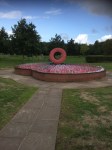
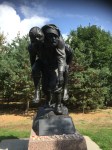
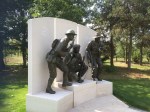
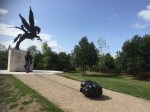
Here are some images of the memorials around the park – it was a beautiful setting, very poignant and certainly well worth a visit.

We joined the train tour around the site (much to my Nephews delight) which took us on a circular route, explaining some of the memorials and giving us more insight into their meaning and significance. Really helpful to get an idea of the size of the place and understand what it is all about.

Lunch next – just as good as the morning snack and lots of choice, I went for healthy(ish) and it was delicious.

IMG_7707.JPG

Next we started our own tour on foot of the memorials, but you really would need a good few hours to see them all. We were there for 4 hours and didn’t get to see everything.

The ‘Shot at Dawn’ memorial was pretty harrowing. It was honouring all of the soldiers who were shot in the back for desertion or cowardice (all of whom have now been posthumously pardoned). These men were generally shot for having ‘Shell Shock’ or what we now know as PTSD (post-traumatic stress disorder). The main statue was of a soldier who was just 17 years old – away from home and terrified  – who was shot in this way and he is surrounded by wooden poles, all representing another individual who was shot at dawn.

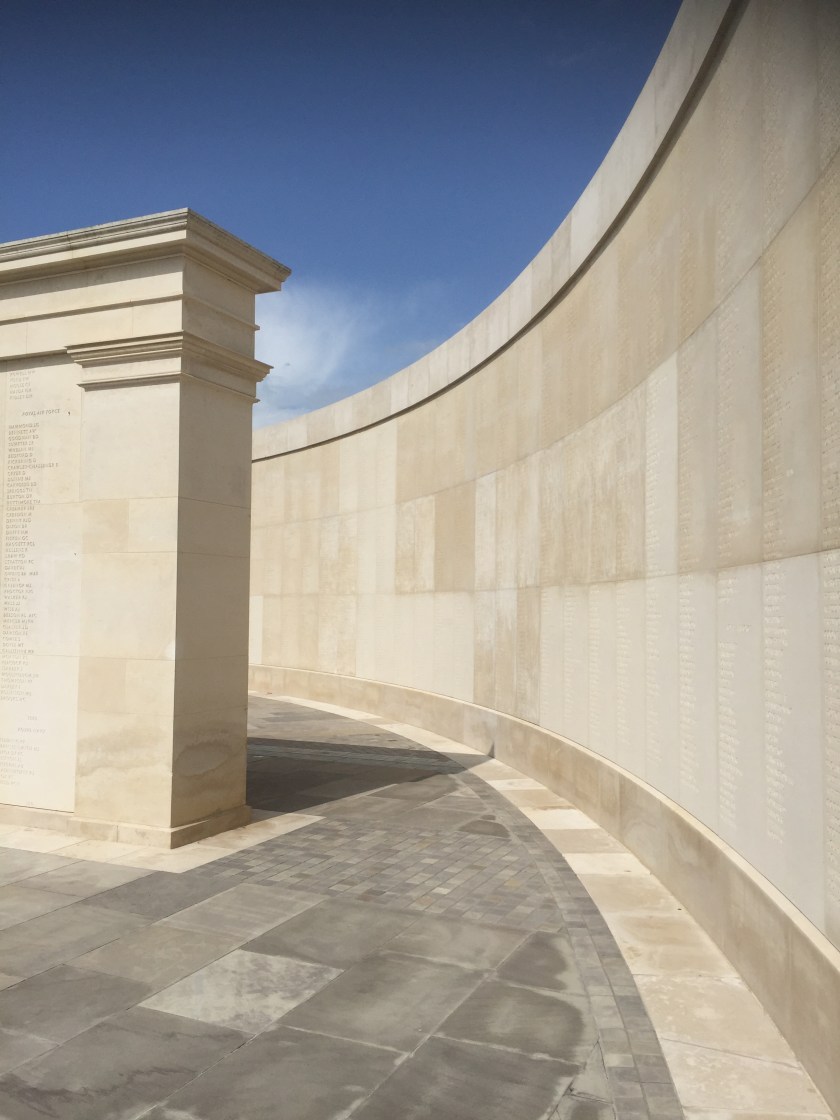
One that really hit home with me was the Armed Forces Memorial, honouring members of the Armed Forces (Regular and Reserve) who were killed on duty, or as a result of terrorist action, and those who died while deployed on designated operations.

Literally thousands of names were listed, all without rank, because this isn’t important, everyone is equal and no more important than anyone else in death.

IMG_7727.JPG

The centrepiece of the Memorial is two large bronze sculptures, representing loss and sacrifice, on either side of a central bronze laurel wreath. Created by Ian Rank-Broadley, the sculptures bear silent witness to the cost of armed conflict.

To the north, a Serviceman is raised aloft on a stretcher by comrades. On either side family members look on – a mother clasped by a child and an older couple clutching each other in anguish. It bears witness to the cost of armed conflict to those left behind – the families, loved ones and friends who live with the pain and consequence of their loss for the rest of their lives.

IMG_7724.JPG

Opposite, the body of a warrior is being prepared for burial by female and Gurkha soldiers. The figure before the double doors points to a world beyond where the warrior will rest as another figure chisels the name on the memorial.

IMG_7717.JPG

The alignment and axis of the Memorial portray a greater meaning and draws inspiration from prehistoric monuments. At the 11th hour of the 11th day of the 11th month the sun’s rays stream through the door of the sculpture, illuminating the wreath in the centre of the Memorial.

Source – http://www.thenma.org.uk/

I laid a small poppy cross of my own to remember those who have fallen and those who are still sacrificing their lives for our safety at home and abroad. I hope that my Nephews (in fact, I know) are bought up to respect the memories of all those who sacrificed their lives to enable us to live ours as we do, and all of those who continue to protect us.

We headed back to the campsite afterwards as it was a lovely afternoon and we could chill out around the vans, playing with my Nephew and relaxing. I also has some help writing the first part of this blog 🙂

IMG_7757.JPG

Back online now and it’s nearly time for bed. Earlier my chief engineer (AKA Dad) took a look at my caravan heating as it seemed to be playing up. Have had full training on most effective way of using it now, so hopefully should be ok for my future travels.

IMG_7761.JPG

Also spent some time in my van with my Nephew who insisted on getting under all my bed clothes and then getting me under there too and tucking me in 🙂

IMG_7755.JPG

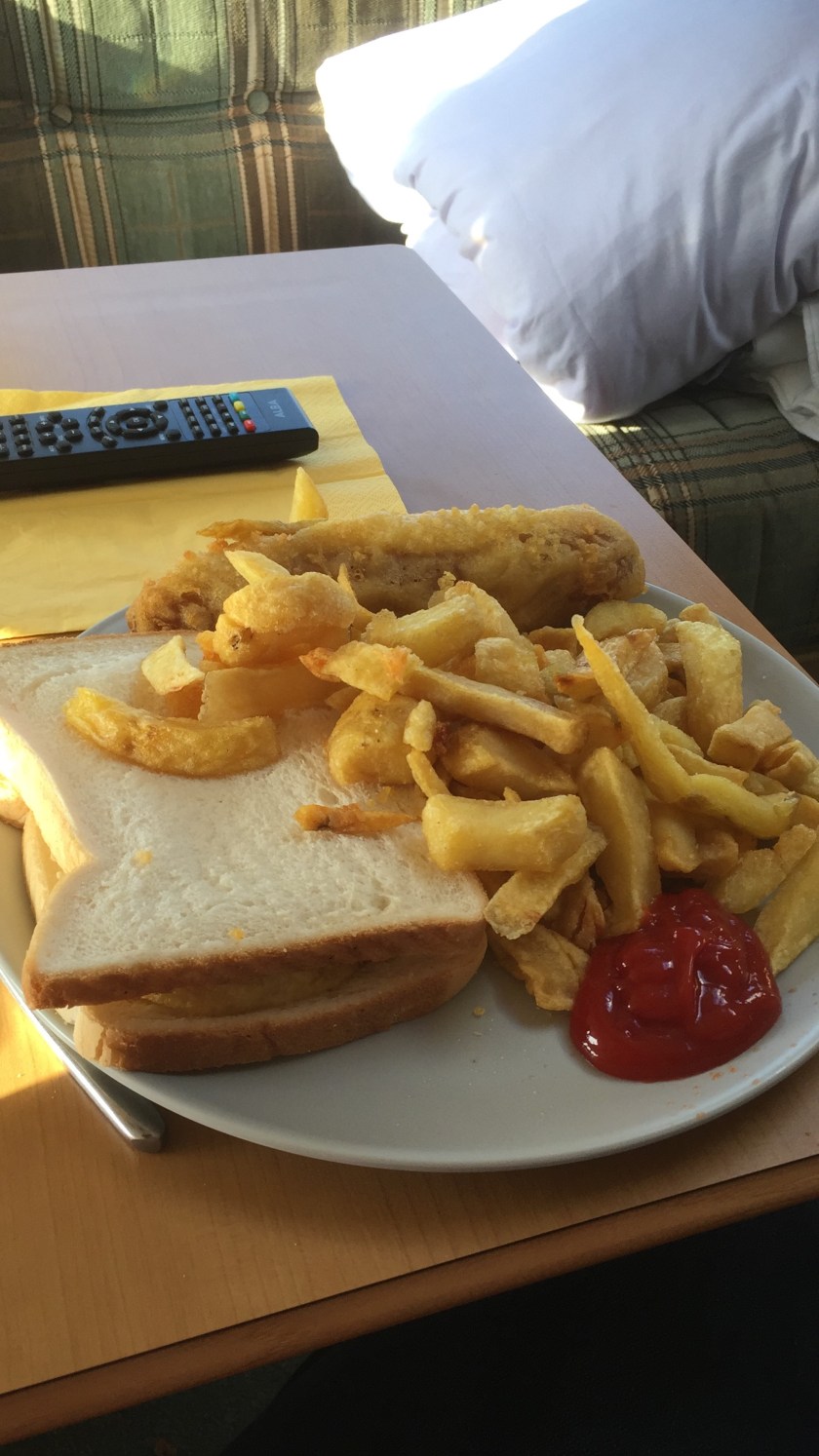
We all enjoyed a lovely sausage/fish and chips dinner from a local take away (Whoops – twice in one week) and homemade Bakewell Tart in honour of mine and my Mum’s time in Buxton – very near Bakewell – even though we didn’t get to visit there!

I’ve had a lovely evening chatting with my family and putting the worlds to rights.

Interesting facts of the day from visiting the Arboretum

Daylight Saving Time – Changing the clocks according to the season dates back to Roman times, but did not come into modern day use until WW1 when it was decided it would help the war effort, by saving vital electricity, as factories could open for longer, without having to resort to electric light. Germany and its ally Austria were first to adopt this in April 1916 and a few weeks later Britain did the same. After the war most European Nations returned their clocks back to standard time – apart from Britain.

Defence of the Realm (DORA) – Four days after the start of WW2, the British Government introduced the DORA Act which put strict controls on civilians, including new rules about serving alcohol. It’s only in 1988 that these were changed! They included, not drinking at all on Sundays, it being illegal to be drunk in a pub and you could also get arrested for flying a kite, using binoculars and feeding wild animals!

‘Having a Chat’ – ‘Chat’ is a Hindu word meaning ‘Parasite’. In WW1 many soldiers became infected with lice which they would have to remove from their uniforms. The activity often provided the chance to have a conversation with friends, hence the saying ‘We’re having a chat’!


Quick note on the treatment of people towing caravans by other drivers

Caravan drivers do generally drive more slowly and carefully to keep ourselves and other drivers safe, mainly due to having a heavy load attached to the back of our cars that means it takes us longer to stop and start.

We don’t do it to annoy you and actually legally, we aren’t allowed to go above 60mph on the motorway or dual carriageways, and 50mph on single carriage ways – IT’S THE LAW.

All of our cars are powerful enough to handle the extra weight and pull of our vans (or they should be, some people are just stupid), but we do take a little longer to pull off from junctions (safety first) and will be a bit slower up steep hills and around sharp/blind corners.

It’s not to annoy you. Please don’t beep us (unless we are doing something silly, which is just as likely for someone not towing a caravan) and please do not try stupid, dangerous manoeuvres to get past us, to save yourself a few seconds/minutes on your journey. Yours and our lives are more important.

Caravan drivers are just normal people, trying to go on holiday and enjoy themselves. Thank you.


Friday 24th August – Moving on to Derbyshire

I’m saying goodbye to Bron-Y-Wendon this morning and moving on to my next campsite and also meeting up with some of my family there 🙂

As I said in my intro, my family had a long history of camping/caravanning together and we still all try to get together a few times a year now, even though we have all left home and have families/jobs etc that keep us busy.

This time, my older sister, BIL and older Nephew are sunning it up on holiday abroad, so it’s my parents in their van and my little sister, her husband and my little Nephew who will be meeting me.

A painless packing away process this morning, after going to fill up at the petrol station as I forgot last night in my rush to get my chips back before they got cold. I did have to duck in my van a few times when it rained, but it was bursts of rain and then lovely sunshine straight afterwards. I also remembered to pack myself a little packed lunch and drink as the journey was predicted to take about two and a half hours.

It took pretty much three and a half hours all in all.

As you know, journey mapped out ready, and started off well, then the road closures ( 2 in total) and diversions began about 30 minutes into my journey and took me totally off course.

Now this time I was able to pull over into lay-bys as I was on major ‘A’ roads every time the journey took a different route, so I could check where my phone was trying to take me (by this point the written/planned journey wasn’t going to work). This meant that I could avoid all of the ‘B’ roads it was trying to send me down and stick to the bigger roads. This did mean adding a little time on to my journey, but worth it to not stress!

One funny moment on the journey was about an hour in, knowing I still had about two hours of driving left. One of the wonders of caravanning is that on a long journey between sites, you basically have a portable toilet with you. Now I wouldn’t recommend a lot of people using it, for fear of ‘spillage’, but for one careful owner/driver, it’s safer that leaving your car and caravan unattended at a big service station to use their dirty facilities.

I decided a stop was needed (don’t worry I won’t go into too much detail) so pulled into a large lay-by, locked my car and unlocked my caravan. Made my way to the bathroom and suddenly realised how tricky this may be, because every time a lorry or large van went past my van, it swayed rather alarmingly! I also realised that I hadn’t shut my bathroom blind and anyone looking carefully (and they would have to had looked very carefully) could have seen exactly what I was doing! Quickest ‘stop’ I’ve ever made and I felt more seasick after that then on the boat yesterday!

Eventually got to the campsite and was welcomed by my sister and nephew, who for five seconds was very happy to see me, until he noticed a free roaming chicken and that became a lot more interesting!

Booked in at reception and was shown my pitch, right next door to my parents and sisters van (once it arrived, my BIL was on his way and she had come with my parents earlier in the day).

Easy set-up process (getting good at this) and I also had a most wonderful helper with me…

The rest of the afternoon was spent playing with my Nephew at the park and around the vans and chatting with my family – lovely.

Dinner was chicken, potatoes and peas and Mum’s homemade apple pie and custard – delicious.

It was very nice to have so many people to speak with this evening – I’ve missed the company. A pretty long day all in all, so heading to bed now, more tomorrow. Night!

Thursday 23rd August – I couldn’t resist!

You may remember that in an earlier post I said that I was going to leave the Isle of Anglesey to another holiday – well I didn’t!

I’ve only scratched the surface though and will definitely return.

I was up early (I had to set an alarm!) to make sure I got to my first stop on time and left the campsite just before 9.30am.

I drove over the Britannia Bridge to get there, which covers the Menai Strait, the waters that have fed and protected this island and challenged the greatest of engineering minds. It is also said to be one of the most difficult navigation channels in the world. The bridge was rebuilt in the 1970s following a fire, whereas the original was built after the arrival of the railway on Anglesey in 1850 by Robert Stephenson and William Fairburn.

As soon as I had turned off the bridge and was headed towards my first stop, I had to pull over to take some photos of the Britannia Bridge and the one facing it – the Menai Suspension Bridge – opened in 1826 and built by Thomas Telford to create a vital link on the A5 between London and Holyhead. A fabulous sight to behold as soon as you enter the island.

I was headed towards Beaumaris to catch a boat! A beautiful coastal town that faces onto the mainland of Wales and as I arrived, there was a little bit of sun to welcome me.

I had pre booked my tickets, but I had to go and pick up a boarding pass, so after doing this, I had a quick 15 minute stroll through the town before I was due to embark. The views were very pretty, as was the town but it was very breezy! I was beginning to worry my boat trip might be a little bumpy.

(It’s really great to see all of the signs in Wales in English and Welsh (like the sign post in the photos). You could pick up some of the language very quickly this way).

At 10:50am I joined the queue on the pier to get on the boat, handed over my boarding pass and stepped gingerly onto a rather small boat. I made sure I sat in the middle, near a life buoy, as many of my friends and family will tell you – I am not a big fan of boats and even once felt a little sea sick on a canal boat! Why did I book a boat trip I hear you ask? Well, I wanted to see the seals and Puffin Island!

On the way to the island we passed a few points of interest (thanks to the Seacoast Safaris for this information).

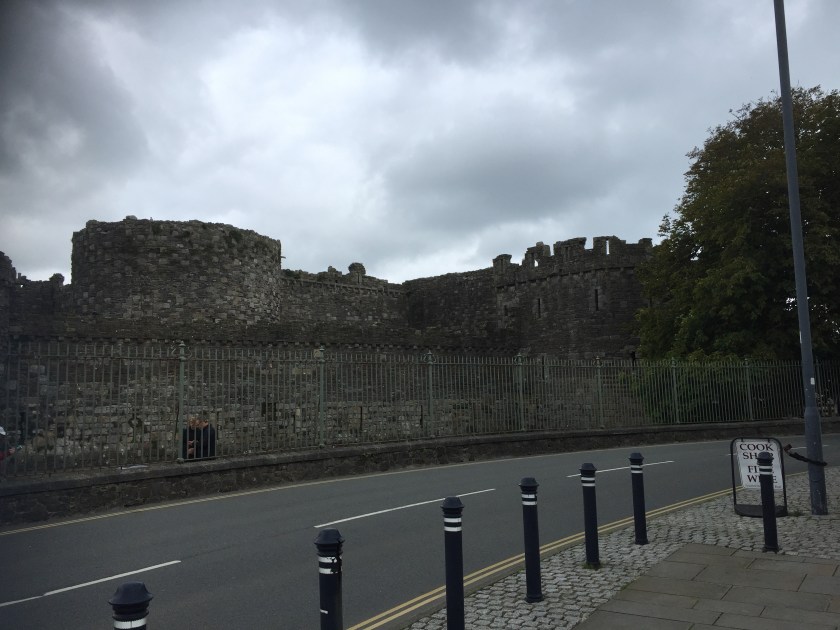
The Beaumaris Castle – Dating to 1295 buily by Edward I, it was never completed. One of the fortifications known as the ‘Iron Ring’ of North Wales.

IMG_7609.JPG

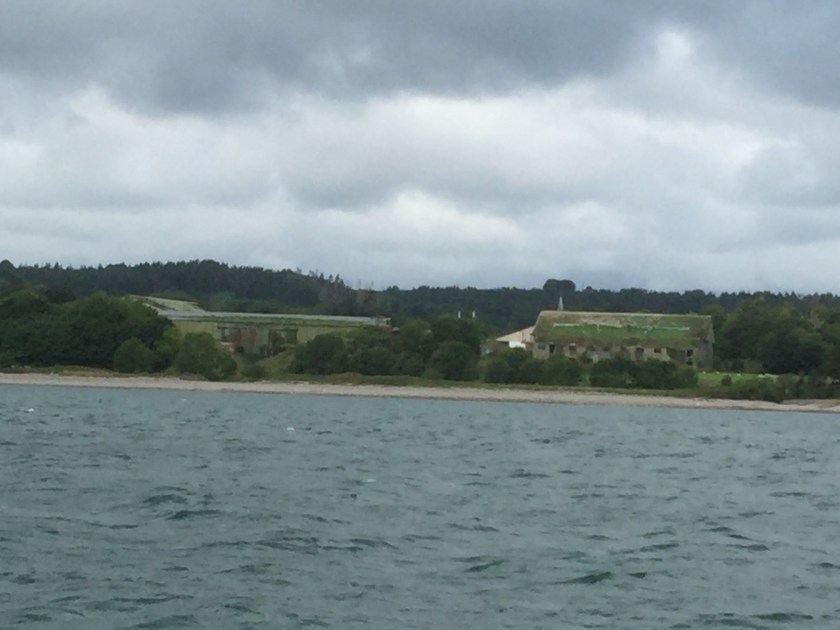
Saunders Roe – This site in Llanfaes used to house Catalina flying boats during WW!!, they were serviced, maintained and modified here.

IMG_7575.JPG

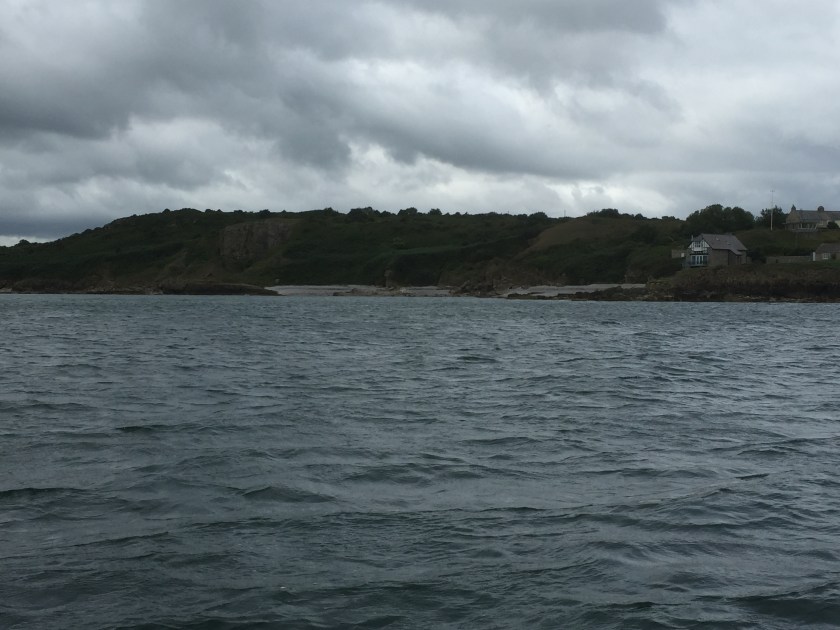
Pemon Priory – Established 6th century by St Seriol, who later moved to a hermitage on Puffin Island.

IMG_7578.JPG

Penmon Lighthouse – Dating to 1838, built after the Rothsay Castle disaster. The lighthouse has a white light and a bell and was manned until 1922.

As we approached Puffin Island, we were treated to a lot of wildlife, from different types of gulls, to Shag’s, cormorant, Oyster catcher, but sadly no Puffins. You have to come between April and the start of August to see those, so I will certainly come back to do that one day.

What we did see was Seals! If you look carefully (ok, I have ringed them for you!) you will see little seal heads popping up to say hello! A lovely sight.

I did wish a one point that I had bought me ‘proper’ camera with me, but I feel I am being more authentic using my iphone as it’s what most people use to record memories nowadays, so I apologise that the photos aren’t great, but I saw it with my own eyes and that good for me. You’ll just have to go and see for yourself!

After a lovely hour and a half cruise with Seacoast Safaris (only £10.95 for an adult) I was back on dryland and had another lovely wander around the town before settling down to eat my lunch on the seafront. The boat trip had been pretty choppy, but I coped!

That lasted about 3 minutes because as soon as I got my sandwiches out, I was dive-bombed by a seagull! So I retreated to my car which was luckily parked with the same view.

Next stop was another National Trust property – Plas Newydd.

This building has a varied history, from holiday haunt, to Naval collage, to family home. It also has ties to the Battle of Waterloo  as Henry William, our 1st Marquess, played a key part.

His bravery and leadership on the day won him great renown; he lost his leg and was the first to receive a fully articulated wooden leg. There is a very interesting museum all about this all pieced together by the family who found documents and wooden legs in the buildings cellars and began to research the stories!

The 5th Marquess of Anglesey was born Henry Cyril Paget, in 1875, the only son of the 4th Marquess, he inherited the title in 1898. A very exuberant fellow, who loved the theatre. He bankrupted the family holding ‘the Great Anglesey Sales’ (40 days of sales with more than 40,000 lots) to recoup some of his debts.

In the 1920s and 1930s Plas Newydd was a busy place with a vast servants’ area and bustling kitchens. Changes in the 1950s mean that those areas look very different today, so sadly no photos or rooms to look around. Members of the family still live in the house today. Some lovely rooms to look around though.

Image-1.jpg

An artist Rex Whistler was commissioned to paint a mural in the Dining Room – it was spectacular. The photo below that looks like a coat of arms carved in wood, is in fact a painting – amazing.

Drove to Benllech next and the beach was gorgeous. Unfortunately it had been drizzling all day, so not beach weather at all, but some of us British were on there trying to enjoy themselves! I sat for a while before I got nervous I’d get a parking ticket and headed back to my car. I parked and didn’t pay because the only option was £4.50 for up to 3 hours – no other choice! I only wanted an hour max!

It was time to head for home now, but before that I headed to a beach a little closer to home and had a lovely half hour walk to clear my head and enjoy my surroundings.

Of course, a girl’s go to eat, so I went back to the site via the local chippie I saw yesterday!

A2AF1DF5-C9E6-49CF-B183-D2B505472170.JPG

Quickly ate my dinner and then decided that I’d better take my awning down while it was dry (the sun came out as soon as I got back to the campsite!). The problem was it was once again, very windy. I was honestly worried it would blow away so very slowly removed each peg, leaving two in the ground until the last minute. The awning was flying all over the place and I was honestly beginning to worry that I wouldn’t be able to stop it flying off when I unattached it from my caravan when a lovely lady from the pitch next door came and offered to help. How kind! We managed it together and she left me after we had literally stuffed the awning in its bag, to go and have a go at her husband who didn’t bother to come and help, just looked at us out of their caravan window!

I tidied away as much as I could as I’m off to a new site tomorrow and settled down to write this post.

Reflection of the day

As you all know, the trigger for this trip was being made redundant a few weeks back and the opportunity that presented to me. Throughout the trip I’ve been thinking things through and at times felt a little overwhelmed with everything that’s happened recently and what might happen in the future.

Today I found some clarity while, of all the places, I went through a tunnel underneath the Welsh hills.

I was listening to the radio, trying to stop myself overthinking and hoping that music would help, humming along to the tune. I saw the tunnel up ahead and as I approached the entrance the signal to my radio and my navigation system started to break up and eventually all I could hear was static and all I could see was this long tunnel head of me, with no real direction of which way I needed to go.

‘How annoying’ I thought, ‘though I’ll get out of the tunnel soon and all will be ok again’.

Sure enough, as I continued my journey and approached the end of the tunnel, the radio gradually began to become clearer and my navigation and directions to my route started up again – clarity once more.

If that isn’t a metaphor/analogy of my life right now, I’m not sure what else is! Morale of the story for myself and for anyone else reading this and going through anything tough – the noise (static) in your head will clear and your journey through life will continue onwards and most probably upwards. You just need to get through that tunnel.

Quick note- Thank you to a very special friend, who after talking with me last night, made me realise that sometimes you need to feel really bad before you can begin the process to feeling better. You know who you are xx

Moving on tomorrow to meet some of my Family for the long weekend in Derbyshire and I’m looking forward to seeing them. Does mean I have to drive tomorrow, but my lovely Dad has checked the route for me and sent it over, so hopefully all will be good. You will find out tomorrow!

Wednesday 22nd August – Snowdonia and a Castle

Started today with no plan and instead organised my day tomorrow! More about that after I’ve done it!

It’s raining – the weather couldn’t be more different from yesterday. Back to autumn again and a rain coat will be needed all day. So, where better to spend a rainy day? A Copper mine of course!  Well, if you’re going to be damp all day you may as well go somewhere damp too?

There is a long history of mining in Wales, so I had a few to pick from and finally chose Sygun Copper Mine. I decided to organise my journey there to cover as much of Snowdonia as possible and set out after checking out the route on the map.

I didn’t get lost! Sadly, the weather didn’t give me the best opportunity to see Snowdonia at its best, and I am sure that if the rain and cloud wasn’t there, the views would have been stunning, but they were still pretty gorgeous in the rain and mist.

After a lovely hours drive, I arrived at Sygun Mine and made my way to the visitor centre to buy my ticket. Sygun is a Victorian copper mine that was closed in 1903 but was renovated and reopened by the Amies family as a tourist attraction in 1986, focusing on audio-visual tours of the underground workings. Sygun Copper Mine was once the main supplier of minerals in wales.

IMG_7444.JPG

You get to walk through the mine alone, without a tour guide and as you go along the passageways, there are audio guides to tell you about the history and stories from the mine, and there are a few wax models too. You had to wear a hard hat, sturdy shoes and my waterproof was important too – it was raining as much down there as it was outside.

I’ve been to a few mines before so know the hardship the miners endured, many working and living in the mine for around a month at a time to try to make as much money as possible.

They had to buy their own equipment and pay the owners to mine for them! It was an incredibly hard life, with a small amount of pay-off at the end of it, but one of the few ways you could make a living around here during the early 1900s.

It was a very interesting place to visit and took about 30-45 minutes to walk around, plus a few steep stairs on the way. When you get to the exit there was a lovely hill walk to get back to the car park with some amazing views.

Opposite Sygun copper mine, on the other side of the Gwynant Valley is a rounded hill (Dinas Emrys) on which the Romans built a fort. The hill has links with King Arthur and the Welsh Magician, Merlin. Arthur is said to have had a castle here. Whether legend or not, research suggests that there was a rich man’s house on the hill, dating from Arthur’s time. It was here that two dragons, one red and one white, were said to have been disturbed by man’s digging. These dragons fought, the red one being the victor. The legend tells us why the red dragon appears on the Welsh flag. (Source – Sygun museum)

There is also another famous place near the mines in the town of Beddgelert. The story goes that in the thirteenth-century, Prince Llywelyn the Great had a palace at Beddgelert in Caernarvonshire, and as the Prince was a keen hunter. He had many hunting dogs, but one day when he summoned them as usual with his horn, his favourite dog Gelert didn’t appear, so regretfully Llywelyn had to go hunting without him.

When Llywelyn returned from the hunt, he was greeted by Gelert who came bounding towards him …his jaws dripping with blood. The Prince was appalled, and a horrible thought came into his mind …was the blood on the dog’s muzzle that of his one-year old son. His worst fears were realised when he saw in the child’s nursery, an upturned cradle, and walls spattered with blood! He searched for the child but there was no sign of him. Llywelyn was convinced that his favourite hound had killed his son. Mad with grief he took his sword and plunged it into Gelert’s heart.

As the dog howled in his death agony, Llywelyn heard a child’s cry coming from underneath the upturned cradle. It was his son, unharmed! Beside the child was an enormous wolf, dead, killed by the brave Gelert. Llywelyn was struck with remorse and carried the body of his faithful dog outside the castle walls, and buried him where everyone could see the grave of this brave animal, and hear the story of his valiant fight with the wolf. To this day, a cairn of stones marks the place, and the name Beddgelert means in Welsh ‘The grave of Gelert’.

I’m afraid I don’t have any photos of this as it was too wet to walk to see this, sorry! You can find a photo and this story here though.

I travelled through Snowdonia again on my way to my next stop, a National Trust property called – Penrhyn Castle and Garden.

This place is all inside after a 10 minutes’ walk to the castle gates – hurrah! Hood down at last!

Originally this was a castle, with a central keep but has been adapted throughout the years to how it looks today, which feels more like a country house.

The castle was stunning. The entrance hall on its own was amazing with its stained glass windows, and the stone work throughout the building looked like a movie set! The refurbishment into a comfortable family home actually took place only 190 years ago, and it looks brand new.

It was lovely to walk around the Castle at my own pace, because I went towards the end of the day, most visitors had been and left, so I could walk around imagining what it would have been like to love there. My conclusion – cold, lonely, but beautiful!

The ceilings and carvings around the stairs were breath taking – I’m not sure these photos do it justice.

It had a lovely atmosphere in the house, but I couldn’t find much out about the family that lived there, so I wasn’t sure if this was the case. There was one photo of a house party in 1894 on the occasion of the National Eisteddfod Caernarfon with HRH Princess Victoria, HRH The Prince and Princess of Wales and the Lord and Lady of the house, and none of them look very happy, but they didn’t smile for the camera in those days!

IMG_7540.JPG

Happily, the servant’s quarters were still there and set up like they would have been in Victorian times, which was great to walk around.

My final stop was in the tea room where I enjoyed some tea and a slice of Victoria sponge before driving back to the campsite.

Back on site, dinner made, washing up done and clothes washed and dried, I am now relaxing and watching some trash TV/reading. Tomorrow is another day in North Wales. Please do a sun dance for me!

Finally a message for my family……It wasn’t me 🙂

(No, really, it wasn’t – can’t believe someone did this in a National Trust property)

IMG_7521.JPG


Tuesday 21st August – Wow North Wales, you are beautiful

Look what I woke up too!

After a leisurely morning in site, checking out the other facilities and buying a Wi-Fi voucher, I took a look at the map book to plan my day. I knew I wanted to stay close to the coast and not ‘visit’ an attraction, just see a few places, so decided to head towards Llandudno first.

I drove in to the town centre first and to be honest only saw a town centre – shops I could visit at home and hordes of tourists. I was contemplating finding a car park and taking a look around to see if I could find any history or museums, when I spotted a sign for a ‘scenic route’. Instant change of plan, I was going that way. And thank goodness I did!

IMG_7377.JPG

Suddenly I was paying a £3 toll to make my way up the coastal road from Llandudno to Great Ormes Head and seeing scenery like this…

It was quite a tricky road to drive at points as it went down to single lanes as you made your way up very steep hills with very tight corners – felt a bit like the race track in Monaco that is so famous (Ok, not quite).

I came across a small church on the way up, which I found out was originally built by a Welsh monk in the 6th century called St Tudno, who Llandudno is named after. The current building dates back to the 12th century. It was enlarged in the 15th century and re roofed and repaired in 1885. There is a pulpit in the churchyard and they hold regular outside services (you can see this in the photo below).

Back in my car and further on up the hill I came to the ‘Summit’, the top of the Great Orme, 207 metres (679 feet) above the sea. From here I could see across the sea to the Isle of Man and the Lake District.

There is a café, museum and play park, but originally the summit complex started as a telegraph station, built by Liverpool Dock Trustees in 1840, to transmit signals from Liverpool to Holyhead. The keeper of the station and his wife were very hospitable and set a room aside to provide tea, lemonade and soda water to visitors during the summer.

The Telegraph Inn was popular and work begun on a hotel with accommodation for 30 people in 1903. During WW!! The RAF used the hotel as a radar station but now it is a welcoming café again.

There is also a tram station that takes you up and down a short distance of the hill and cable cars that are open all year, but there is a ski centre up there too for when it is snowy.

IMG_7406.JPG

After walking around for a while, it was back in the car to make the long trip back down the hill. I stopped at a beautiful viewpoint where I made a new friend. I named her Stephanie 🙂

IMG_7421.JPG

I also learnt a little history here of course! It is from around the point I was standing that German Officers, who were POW in a nearby camp, tried to rendezvous  with a submarine! If fortune favours the brave, then these three officers surely deserved a bit of luck. They had managed to break out of the remote Dyffryn Aled internment camp near Llansannan, and had marched overnight a full twenty miles to Llandudno.

Now they simply needed to rendezvous with the U-boat (UB38) which they had arranged via coded letters back to Germany. The plan was to be picked up by a dinghy sent out from the U-Boat U38, which would be waiting near the Great Orme’s head. Straightforward in theory, in practice this would be extremely difficult. The Germans had no idea of how to get down to the rocky shore, and their only means of signalling to the waiting U-Boat was a small electric torch, which they planned to wave in a circle.

By day they waited in bushes; by night they frantically tried to signal their position, even lighting a bonfire at one stage. But after two nights they had no option but to give up, and were soon arrested and returned to prison camp. It was only years later that they learnt the fatal flaw in the plan: due to a certain laxness in the Welsh coastal defences, the U-Boat was able to come in much closer to the shore than they had envisaged. As a result, the men’s frantic signals were obscured by the rocky coastline!

(Source: https://www.bbc.co.uk/programmes/p02409lh)

I wound my way down the hill and decided that my next stop would be a little further around the coast to Bangor, which is the oldest city in Wales and one of the smallest in the United Kingdom. It’s also where the singer Duffy (Remember, Begging you for Mercy?) is from!

I was hoping for lots of historic building, but to be honest was a little disappointed. It was again, a city centre with shops and I walked to the furthest point to see the sea, and look across to the island of Anglesey. I think that’s somewhere I will visit in the future.

I walked back to my car (forgot to say, free parking as a lovely Gent gave me his ticket with an hour and a half still on it!) and headed back towards the campsite with a stop at Tesco on the way to pick up some food.

Another relaxing evening at the campsite, even managed a bit of sunbathing just outside my can. It’s pretty windy tonight, so trying not to think about the fact that I am on a hill near (though not that near) to the edge of a cliff! Wish me luck!

Monday 20th August – Goodbye to Mum and the Peak District

Today is Mum going home day, so we set an alarm (first one I’ve set for a few weeks!) and made our way to the bus stop in the centre of Buxton. We had a quick 10 minutes’ walk around to stretch our legs as we both have long journeys today.

Saw Mum on to the bus and she was off home. It was lovely to have someone (especially my Mum) come and visit me on my travels and share some of my experiences. It was sad to see her go, but onwards with my adventure!

As you know, I mapped my journey out with Mum last night so I set off pretty confidentially this morning after packing away the van. I had my phone going just in case and directions in big writing to refer carefully back to as well. I knew exactly where I had to go at the start as I’d practised it the night before and I followed it to the letter.

When I’d practised the start of the journey with Mum the night before, we got on to a certain road and then turned around as I was happy I knew where I was going. As we were about to turn we noticed a flashing traffic sign a little bit ahead and dismissed it as a ‘Slow Down’ sign as the corners/roads were pretty hairy in places. In fact, this sign said that one of the roads I had planned to take was closed and to make other travel arrangements. I of course didn’t get to read the sign until I was right up to it the next day with the caravan on the back!

I think I am getting so practised at my journeys never going to plan that I am beginning to chill out about it as I actually laughed! There was nowhere to go but straight on and to hope I’d see a sign and figure it out. I did, it just took me on quite a detour and instead of staying on ‘A’ roads, I ended up on motorways, which isn’t a bad thing as I don’t have to reverse or worry about getting stuck in a corner and if I miss the junction, I get off at the next one.

All in all, an easy journey and I found the campsite very easily – in the rain. Bloody rain!

A friendly welcome in reception and when the Lady asked me if I am comfortable reversing my caravan, I answered honestly no, but I have a motor mover. So it was all ok! I have been asked for a video of me motor moving so that people can understand, but that’s a bit tricky when I am on my own. Will post one when I am with someone who can film me!

The poor lady who works there then had to guide me to my pitch in the horrible weather – I did feel bad. But that soon stopped when she went back to her warm reception room and I was left to set up in the rain on my own!

Soaked at the end of it, so went and took a shower to dry off (if you see what I mean!) and when I got back to the pitch, it had stopped raining for a bit and I noticed the view from my pitch – here it is…

IMG_7343.JPG

I’m afraid that’s as exciting as my day got as I really didn’t feel that good once I sat down and started to relax. So, I went to sleep about 5.30pm for a couple of hours, hence why I didn’t get to buy WiFi as reception had closed by the time I woke up!

What was left of the day was spent drinking a small, medicinal G&T whilst enjoying this spectacular view from my caravan 🙂

IMG_7359.JPG

Sunday 19th August – National Trust day at Lyme Park

Already knew what I wanted to do today as it’s the reason I booked a campsite near here. Lyme Park is one of the National Trust houses I’ve wanted to visit but never been near enough to, so this is the perfect time. Mum is also a member of the Trust, so an ideal ‘free’ day out for us.

IMG_4113.JPG

Sat nav got us lost again, so we resorted to the website directions and a paper map (I think I need to give up on the iPhone maps thing) and sadly we arrived in more drizzle. So, being British, we donned our waterproofs and made our way to the house with our hoods up. (No photo this time, one is enough!)

D2E8D64F-9859-4072-984B-7CAAD6B21A95.JPG

Lovely imposing building as you walk up and unusually, the main entrance to the house is inside an internal courtyard instead of somewhere you could drive up to in a horse and carriage. Meant that well-dressed Ladies and Gents would have had to have walked themselves into the courtyard and up the stairs themselves – shock and horror!

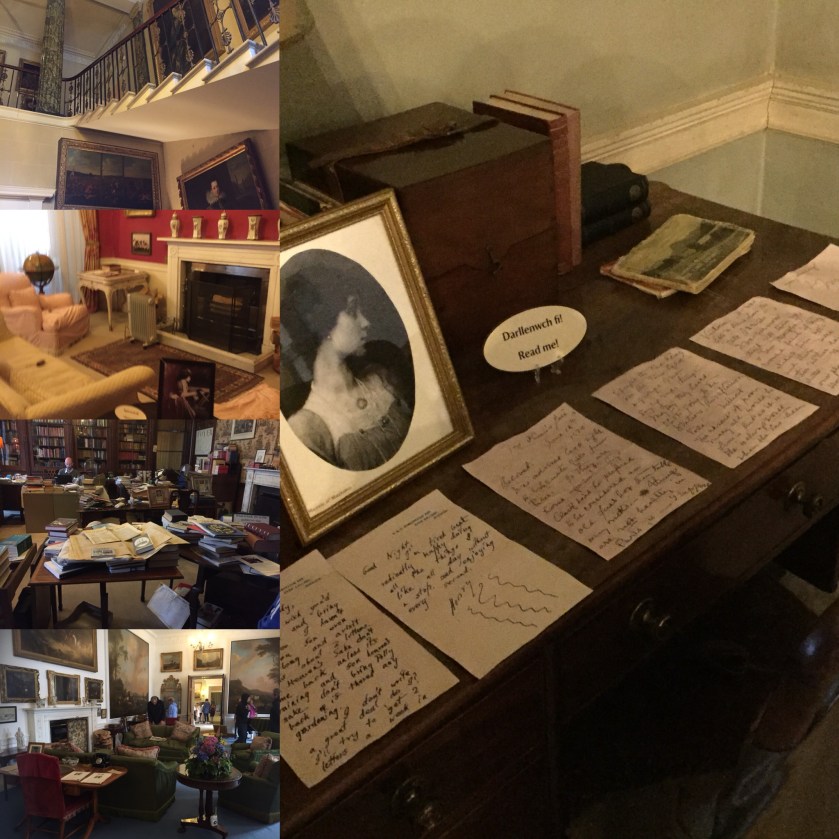
You get to walk through most of the main rooms in the house as no one is living there now as it was sold to the National Trust in 1946. Many of its owners throughout the years have added their own mark to the house, but in the early 19th century the estate was owned by Thomas Legh, who commissioned Lewis Wyatt to restore the house between 1816 and 1822 and ‘made sense’ of all of the rooms. You can now walk from room to room and get a lovely feeling of how the last family lived in the house.

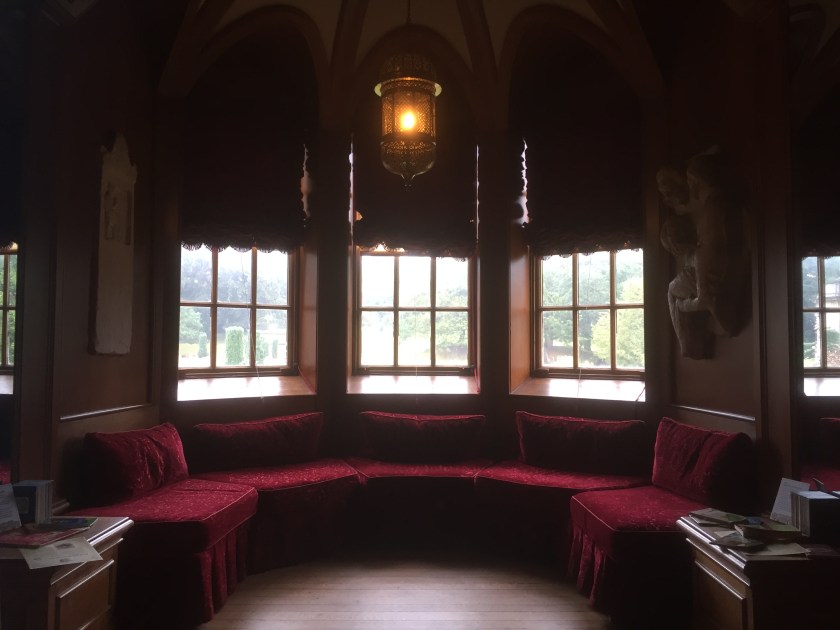
One of my favourite bits of the house was in the Library where there was a area specifically for relaxing and reading your book. I’d love to have a house big enough to fit one of these – that’s where you’d find me with a G&T, any time of the day!

IMG_7318.JPG

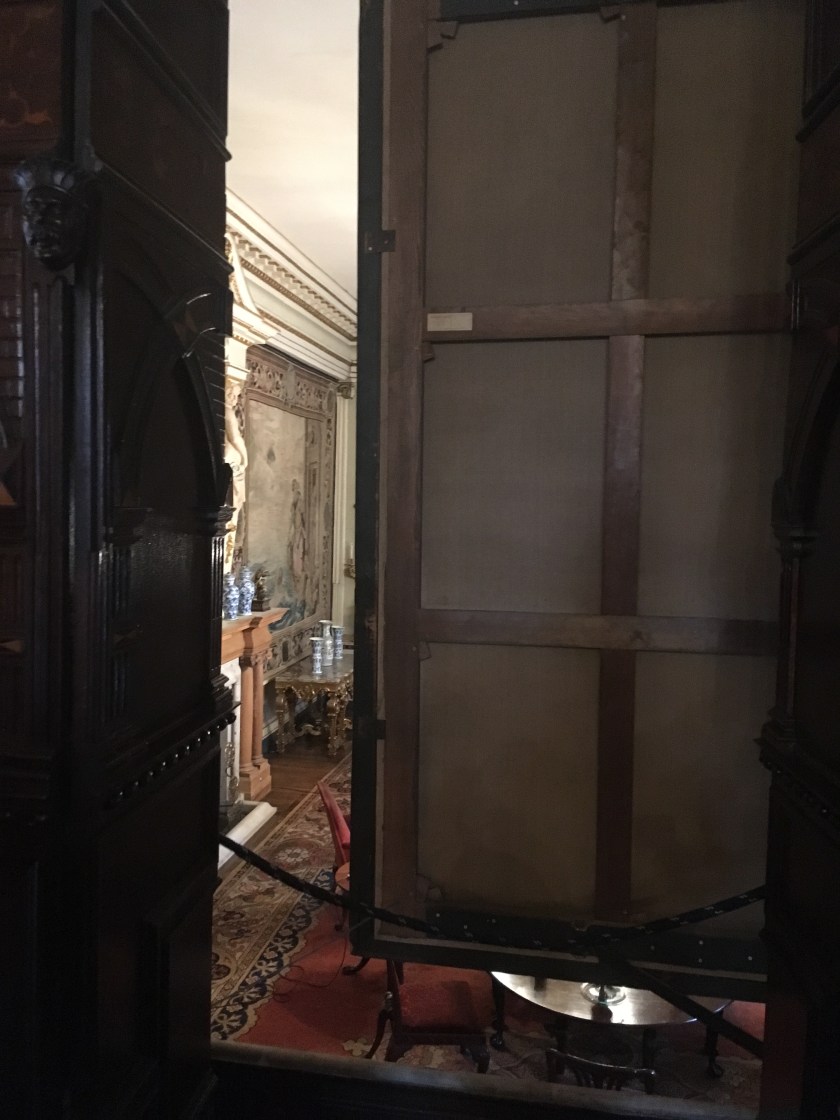
There were a couple of good stories/quirky areas to the house that we found out about from the guides or the write ups in each room. One of these was ‘The Squint’. A huge picture that could be seen from the front entrance room (formerly the main hall of the original house) could be pushed forwards from the room above/behind and squinted out from! You can see what I mean in the photo below. The family used to stand up there in New Year’s Eve to wish their servants a Happy New Year. I bet they also spied on their guests here too!

IMG_4106.JPG

There was a story about a skeleton that had been found under the floor in one of the old bedrooms in the oldest part of the house. The guide told us that they thought that it was probably a Priest who had been hidden there during the time where Catholic priests weren’t allowed to publically show their faith and had either died in there and they couldn’t bury him in consecrated grounds (would have been illegal) so they left him there or the family forget he was there and he snuffed it whilst they were perhaps away on holiday, as he couldn’t get out! Nice!

The guide telling the story was asked how the people living or working on the house didn’t smell a rotting body and her reply was that she has been told everything smelt back then, so it was unlikely to have stood out as a bad odour!

There were also a few ghost stories told, including one about a white female form that follows a funeral procession through the grounds – spooky!

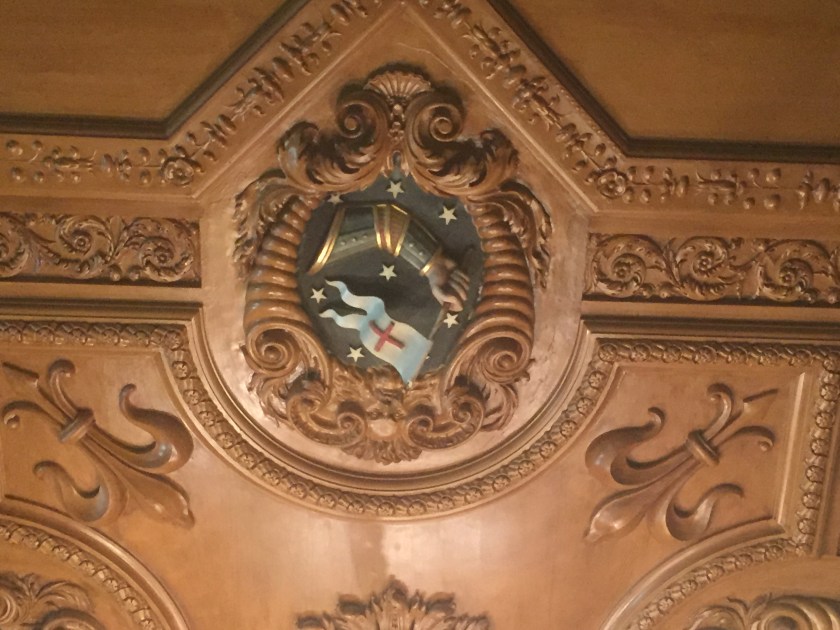
Looking up at the ceilings, I would every now and then notice a severed arm holding a flag in the decoration. This symbol is the ‘Augmentation of Honour’ of the Legh family. The honour was given by Queen Elizabeth I in 1575, recognising the bravery of Thomas Danyers, a Legh ancestor, who rescued the Black Prince’s standard at the battle of Crecy in 1346. In order to retrieve the flag, Danvers had to chop off the arm of the French soldier holding it to being it back too!

IMG_7317.JPG

Mum and I thought about this after we’d left and couldn’t quite understand why the arm had to be severed. Did the soldier refuse to give it up and then let Danyers cut his arm off willingly? Otherwise, if it was cut off after the soldier carrying it had already died, surely the hold on the flag pole would have loosened in death or even when his arm was cut off as the muscles were severed? Grisly I know, but these are the things that play on our minds!

Only disappointing bit was that the servant’s quarters are all being used as the shop and café/restaurants, so there are only a few wall signs giving you a small insight into their lives. I always find this sad as they were 50% of the story! That said, I did enjoy the cheese and chutney pastry turnover with salad I had in the old Ale room for lunch!

All in all, a good place to look around and we learnt a fair bit as well as enjoyed a nice walk around the gardens as it had finally stopped raining. Hurrah! Also saw some of its Red Deer’s as we were leaving with ‘The Cage’ in the background, the old banqueting hall and hunting lodge on the estate.

IMG_4112.JPG

We decided to go over the Peak District National Park to get back to the campsite and to not bother with sat nav. Following a map we planned our journey, set off, only to find the road closed – I swear someone is playing tricks on me!

Found another way around and enjoyed driving along (with a few stops for photo opportunities) and took in some of the spectacular views.

I decided to take the awning down early when we got back to the site as it had stopped raining and was dry and I didn’t want a repeat of the wet awning in the shower episode so soon after the last one. Mum helped as I would have been blown away otherwise, and suggested I use it as a parachute to get me to Wales (my next stop) to save on Diesel and map confusion!

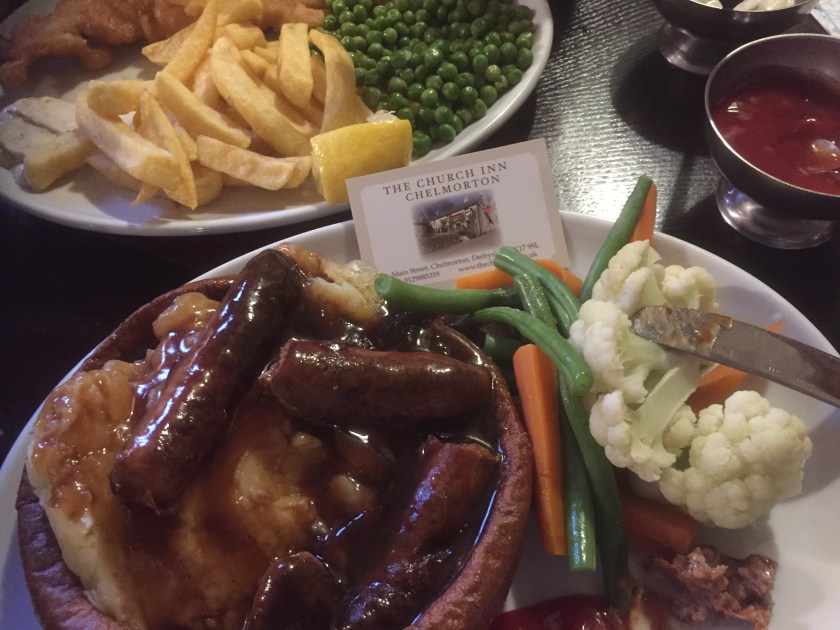
We had been recommended a pub by the campsite that was nearby, so took a trip to The Church Inn in Chelmorton. The Landlord was incredibly friendly, the food was great pub grub and we both enjoyed the atmosphere while we looked over a map book and planned my journey tomorrow.

img_73391.jpg

After dinner we quickly headed into Buxton to do short trial run of the first part of my journey tomorrow as it’s through a town centre with lots of turns and we figured it might make me feel better to do this once, before I have the van attached. We will see if it helps tomorrow as I am dropping mum off at the bus stop in the morning (sad to see her go), going back to camp to pack everything down and then I am off to North Wales. More on that tomorrow…..

A question Mum and I pondered as we crossed over the very dark Peak District National Park and saw lots of cows in fields – Can cows see in the dark?

The answer – Cows can see better than humans can because they have a light reflecting surface called ‘Tapetum Lucidum’ in their eyes which helps animals see better (though not completely) in the dark.